top of page

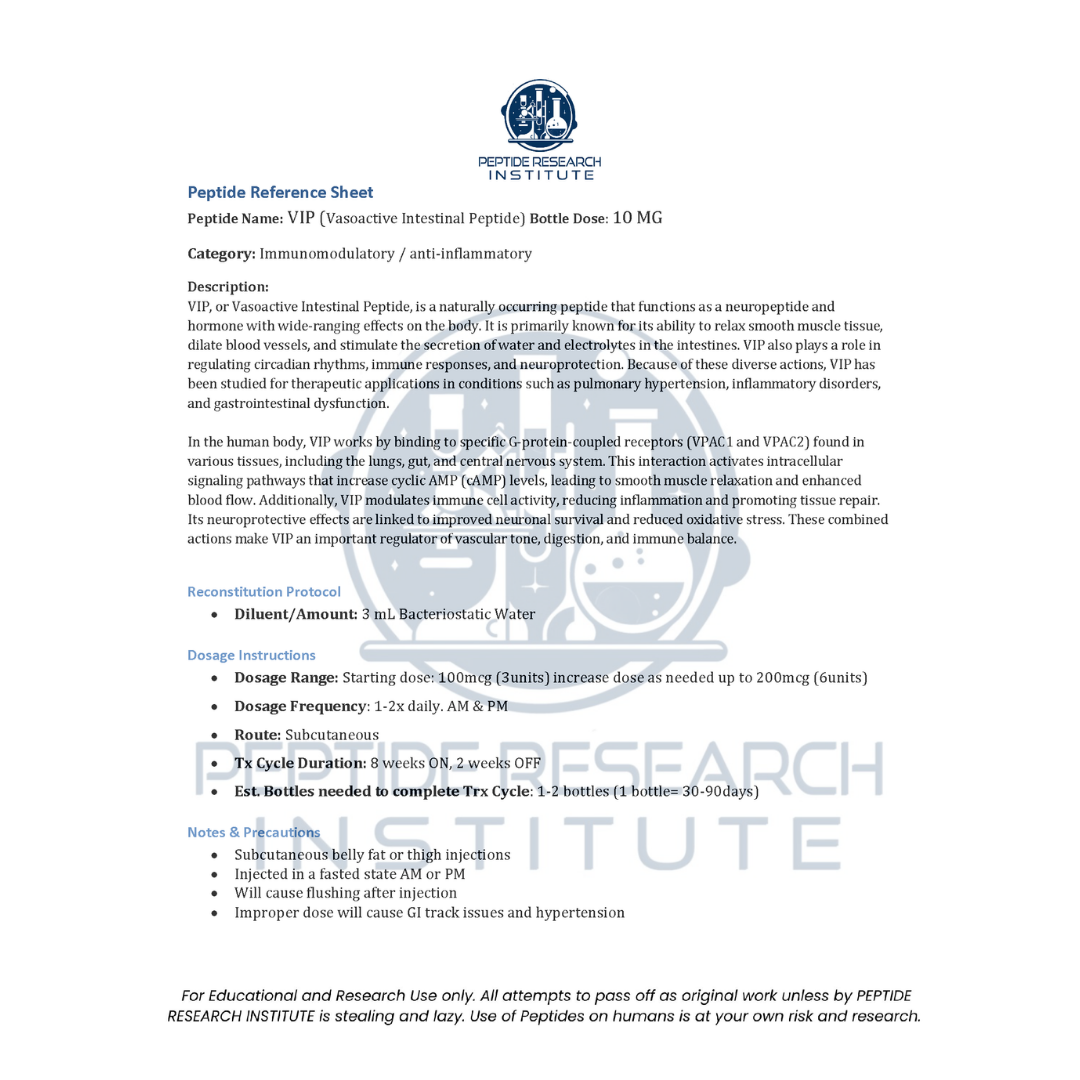
VIP-10mg


  • Peptide: VIP (Vasoactive Intestinal Peptide)

  • Bottle Dose: 10mg

Origin & Structure

  • VIP is a 28–amino acid neuropeptide, part of the secretin/glucagon family.

  • Naturally produced in the gut, pancreas, and brain, especially in the hypothalamus and enteric nervous system.

 Potential Benefits of VIP (Research-Based)

1. Neuroprotection & Brain Health

  • Enhances neuronal survival and protects against excitotoxic damage

  • Regulates circadian rhythm and sleep-wake cycles

  • May improve memory and cognitive resilience

2. Immune Modulation

  • Suppresses excessive inflammation and autoimmunity

  • Enhances tolerance and regulatory T-cell activity

  • Being explored for autoimmune conditions (RA, IBD, MS)

3. Anti-Inflammatory & Healing

  • Protects mucosal barriers (gut, lungs)

  • Reduces oxidative stress and tissue injury

  • May accelerate wound healing and tissue repair

4. Cardiovascular & Pulmonary Support

  • Potent vasodilator → improves circulation and reduces vascular resistance

  • Pulmonary benefits: bronchodilation, improved oxygenation

  • Studied for pulmonary hypertension and asthma

5. Gastrointestinal Function

  • Stimulates intestinal secretion and motility

  • Protects gut lining integrity

  • Potential applications in IBS, IBD, and leaky gut

 Key Caveats

  • Short Half-Life: Native VIP degrades quickly in circulation; analogs or formulations are often required for stability.

  • Potency: Works at very low concentrations; improper dosing can cause GI upset or hypotension.

  • Limited Human Trials: Most clinical use remains experimental (except a few orphan-drug studies, e.g., Aviptadil for pulmonary hypertension and COVID-related ARDS).

  • Systemic Effects: Because it is a vasodilator and gut motility stimulator, side effects may include flushing, loose stools, or low blood pressure.

 In summary: VIP is a multifunctional neuropeptide that regulates inflammation, immunity, vasodilation, and neuroprotection. Its therapeutic promise spans autoimmunity, pulmonary disease, gut health, and neurodegeneration, though stability and delivery remain key challenges.

bottom of page